Nothing to
See Here.
In 1940s Montreal the police raided the same brothels again and again and closed almost none of them. The madams were warned ahead, the woman who opened the door was booked as the owner, the fine went to the city, and the house opened again. Pacifique Plante, the lawyer put in charge of the morality squad in 1946, went after the owners instead, and was fired in 1948. On 28 November 1949 he began setting the system out in Le Devoir. Sixty-two articles later, citizens filed a petition of more than a thousand pages, and on 8 October 1954 Judge François Caron found about twenty officers, both of the decade’s police directors among them, guilty of tolerating organized vice. The crew went down where the sign said there was nothing to see.
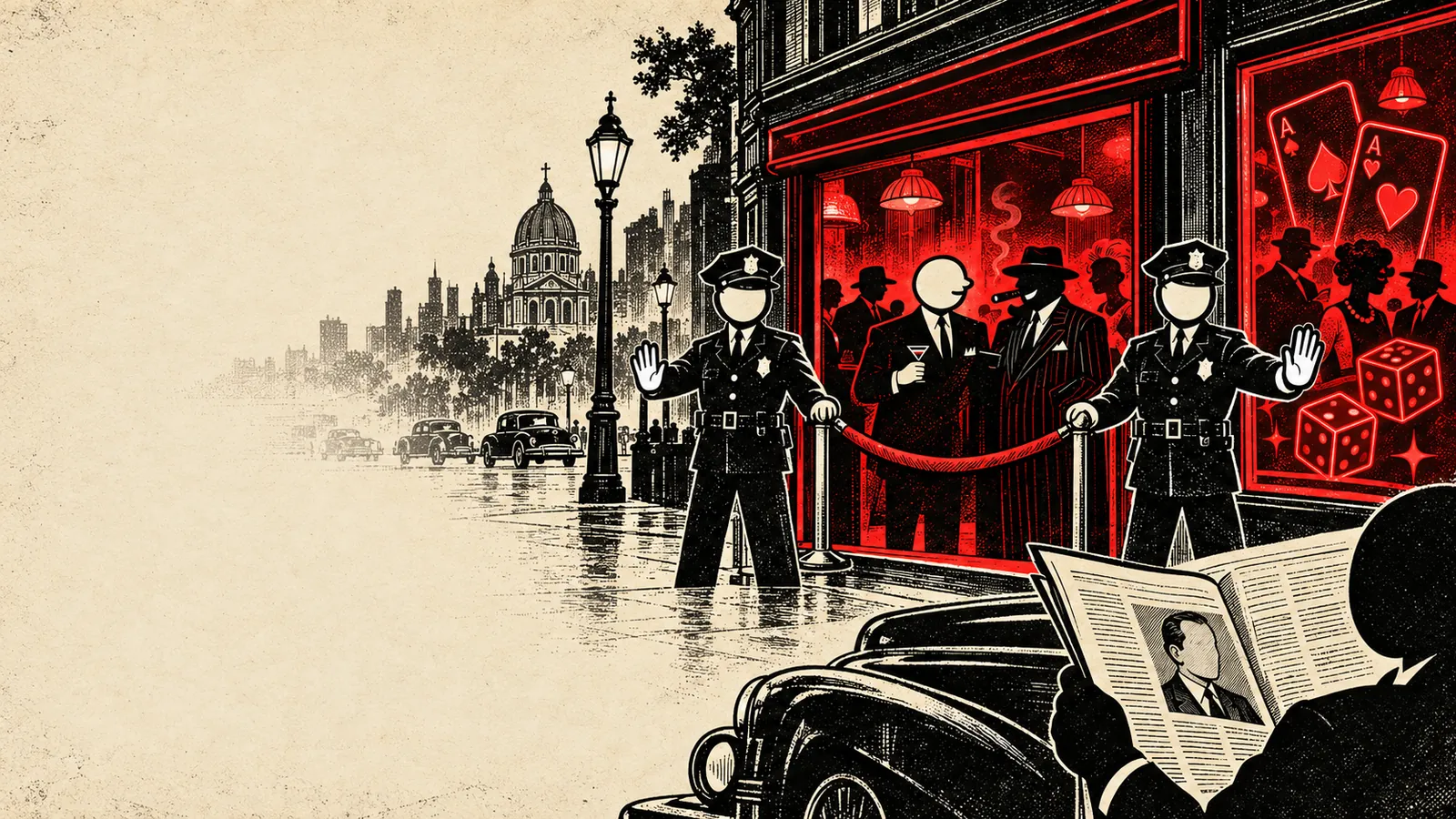
How a raid worked
in the open city, 1940–1950.
Montreal in the 1940s was called a wide-open city, and the phrase was literal. Brothels, betting rooms and the gambling dens Montrealers called barbottes ran for years at known addresses. La Presse counted 116 brothels in the city in 1944, ninety of them in the Red Light district east of Saint-Laurent boulevard. The gambling was not confined to any district. By Plante’s account the barbottes were set up “par toute la ville suivant les possibilités du marché”: across the whole city, wherever the market allowed.

The police did raid them. That was the system. The madams were warned ahead of a raid and left only a few women on the premises. Whoever opened the door to the police was arrested as the owner of the house. The fine was paid, and the house was never closed for long. By one historian’s estimate the fines brought the city about sixty thousand dollars a year. In 1945 the Ligue de vigilance sociale, a citizens’ group, described the raids as “une sorte de taxe que l’on impose périodiquement à ces maisons de désordres”: a kind of tax levied on the houses at intervals.
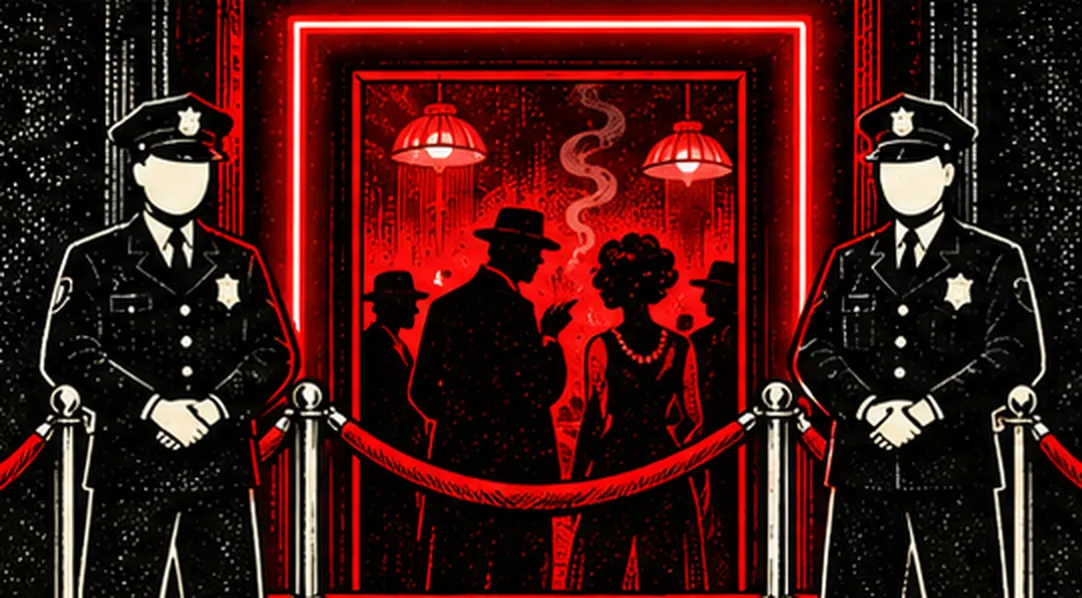
One block of rue Berger shows the arithmetic. Plante counted twenty-eight door numbers on it that had held a brothel, and 1,659 official raids on those doors over the period he studied. The same madams were convicted over and over. Gérard Filion, the editor of Le Devoir, remembered “tenancières condamnées vingt, trente, quarante fois, grosses madames portant un sac à main rempli de billets verts”: madams convicted twenty, thirty, forty times, carrying handbags full of banknotes.
This was not new, and it had been investigated before. In 1924, after a bank robbery, a petition from eighty-two citizens obtained a judicial inquiry under Judge Louis Coderre. His report was made public on 13 March 1925. The law on fraud and corruption in municipal affairs was then amended in a way that made such inquiries harder to obtain. In February 1944 the army forced the Red Light shut to protect its soldiers. The houses scattered, and the routine went on.
The lawyer who arrested
the owners, 1946–1948.
Pacifique Plante, known as Pax, was a Montreal lawyer born on 15 July 1907. In the autumn of 1945 he became legal adviser to the police morality squad. In July 1946 a gambling-house operator, Harry Davis, was shot dead in broad daylight in his own establishment on rue Stanley, and the press and the public demanded a clean-up. On 7 August 1946 Plante was named assistant director of the police, in charge of the morality squad.
He changed the routine. Rather than arresting a few employees caught on the premises, as had been done before, he went after the people who owned the houses and the gambling rooms. The citizens’ groups pressing for a public inquiry got nowhere in the same years: the Ligue de vigilance sociale applied twice, and its second request was refused in the autumn of 1946. The law demanded that a petition set out precise accusations, and nobody outside the force had them.
In March 1947 Albert Langlois became director of police. In March 1948 he suspended Plante, and obtained his dismissal from the city’s executive committee, on grounds of “insubordination et de publicité non autorisée”: insubordination and unauthorized publicity. Plante had been talking to the newspapers. He was out of the force, and he had kept his files.
Sixty-two articles,
28 November 1949 to 18 February 1950.
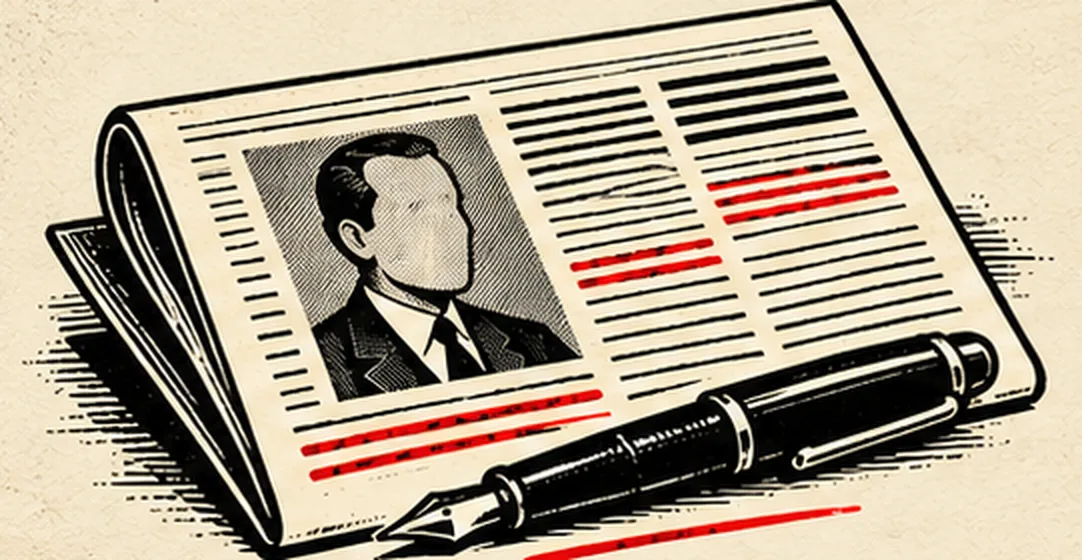
Plante took his papers to Le Devoir. Gérard Pelletier, then a young reporter there, spent three months putting them in order and drafting the text with him. The editor, Gérard Filion, agreed to run it. The first article appeared on 28 November 1949 under the title Montréal sous le règne de la pègre, Montreal under the reign of the underworld. That night men tried to force the newspaper’s doors, and the next morning’s front page announced that armed guards would patrol the building.

The series ran sixty-two instalments, to 18 February 1950. It named the system from the inside: the warnings before raids, the stand-ins arrested at the door, the fines as a recurring charge, the officers who knew the addresses, and an administration at city hall that Plante charged with tacit approval. Circulation jumped. At the end of February the articles were collected into a ninety-six-page book by the Éditions de l’Action nationale, which sold more than fifteen thousand copies in two weeks.
A thousand pages
of precise accusations, 1950–1953.
On 19 March 1950 thirty-five associations, from business, the professions and the trade unions, founded the Comité de moralité publique to obtain an inquiry. Its lawyers were Plante and a young nationalist lawyer, Jean Drapeau. They drew on the files Plante had kept and on what the series had brought in, and on 11 May 1950 they filed a petition in the Superior Court: 1,095 pages, signed by seventy-four citizens, carrying close to five thousand precise accusations against police officers and politicians. No ordinary constable was named.
In May 1950 the chief justice ordered a judicial inquiry and assigned Judge François Caron of the Superior Court to preside. Hearings opened on 11 September 1950 in courtroom 24 of the old courthouse on Notre-Dame street, with Plante and Drapeau as prosecutors. The premier, Maurice Duplessis, held that the province was not responsible for the cost. The stenographers went on strike at one point to be paid, and the committee and Le Devoir raised money from the public in small donations to keep the hearings going.
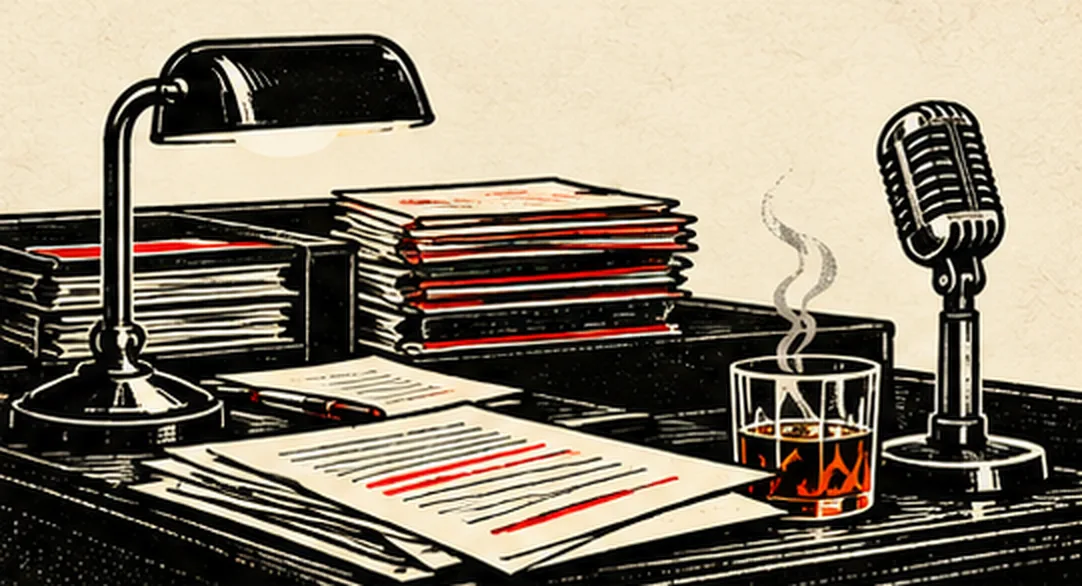
The fifty-eight officers included both men who had directed the force over the decade under inquiry: Fernand Dufresne, director from 1931 to 1946, and Albert Langlois, who had fired Plante. The last five accused were members of the executive committee, among them its chairman since 1940, Joseph-Omer Asselin. To the committee’s supporters the politicians were the principal targets and the police their instruments. The law, though, required precise accusations, and precise accusations could be built against the officers who had worked the addresses. Policemen, prostitutes, madams, gambling-house managers, criminals and politicians went through the witness box. The hearings closed on 2 April 1953.
The sounding:
from five thousand charges to one judgment.
Every stage below is a figure from the record of the inquiry. Drag through them and watch the sixty-three accused: fifty-eight officers in ink, the five members of the executive committee ringed in gold. Then watch how many are left at the bottom of the line.
“About twenty” is the record’s own figure, une vingtaine; twenty dots are drawn. The executive committee members were accused but not condemned.
That is the shape of what the inquiry could reach. The petition carried close to five thousand charges against sixty-three named people. Three years of hearings proved a tolerance of prostitution and gambling across the force through the 1940s. What came out at the bottom was about twenty police officers, fined and barred from municipal office, and no politician. The judge did not find the executive committee innocent. He wrote that its members had shown bad faith and that their testimony had little credibility. He did not convict them.
8 October 1954:
tolerated or favoured.
Judge Caron filed his judgment on 8 October 1954, a year and a half after the last hearing and seventeen days before a municipal election. About twenty officers were blamed, fined and declared unfit to hold municipal office. The finding against them, as La Presse reported it the next morning, was that they had “toléré ou favorisé l’épanouissement du vice organisé”: tolerated or favoured the flourishing of organized vice.
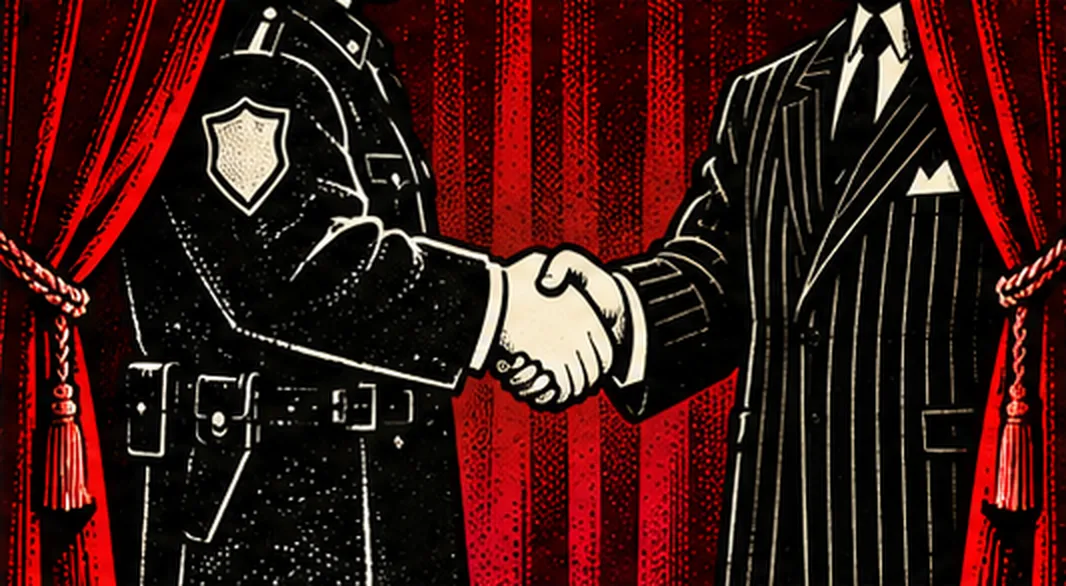
- Fernand Dufresne, director of police 1931–1946: fined seven thousand dollars and declared unfit for municipal office for ten years.
- Albert Langlois, director of police since 1947: removed from his post, declared unfit for municipal office for one year and ordered to pay five hundred dollars in costs, jointly with the city. The finding against him went back to 1945, when he was a district captain.
- About eighteen other officers: blamed, fined and declared unfit for municipal office.
- The five members of the executive committee, including its chairman Joseph-Omer Asselin: not convicted, for want of sufficient evidence, and sharply criticized in the judgment.
- Pacifique Plante: the judge held that his dismissal in 1948 had been unjust.
The judgment also held that the tolerance had not returned to its former level after Plante was fired. The years it condemned were the 1940s. That was the period the series had described, and it was the decade in which the city’s brothels and barbottes had run at known addresses with raids on a schedule.
The log,
from Coderre to Guadalajara.
Twenty entries, each fixed by a document. The hinge rows are the ones where somebody looked, or was stopped from looking.
Back on deck:
what the log supports.
For a decade, Montreal’s police enforced the law against prostitution and gambling in a way that kept both running. The raids were real, they were frequent, and they were scheduled with the people being raided: a warning, a stand-in at the door, a fine paid into the city’s accounts, the house open again. On one block, twenty-eight doors took 1,659 raids. The officer put in charge who changed the routine, by arresting owners, was fired by his director. The record of that routine came out because he kept his files, a newspaper printed them for twelve weeks, and seventy-four citizens put their names to a thousand pages of precise charges.
The judgment confirmed the system and reached the people who ran it in uniform: about twenty officers and both directors of the decade, fined and barred from municipal office. It did not reach the city hall that the petition had named alongside them. The law asked for precise accusations, and the precise accusations were against police officers. One of the two directors was back in his post two and a half years later, on appeal. The lawyer who had started it left the country in 1958 and died in Mexico.
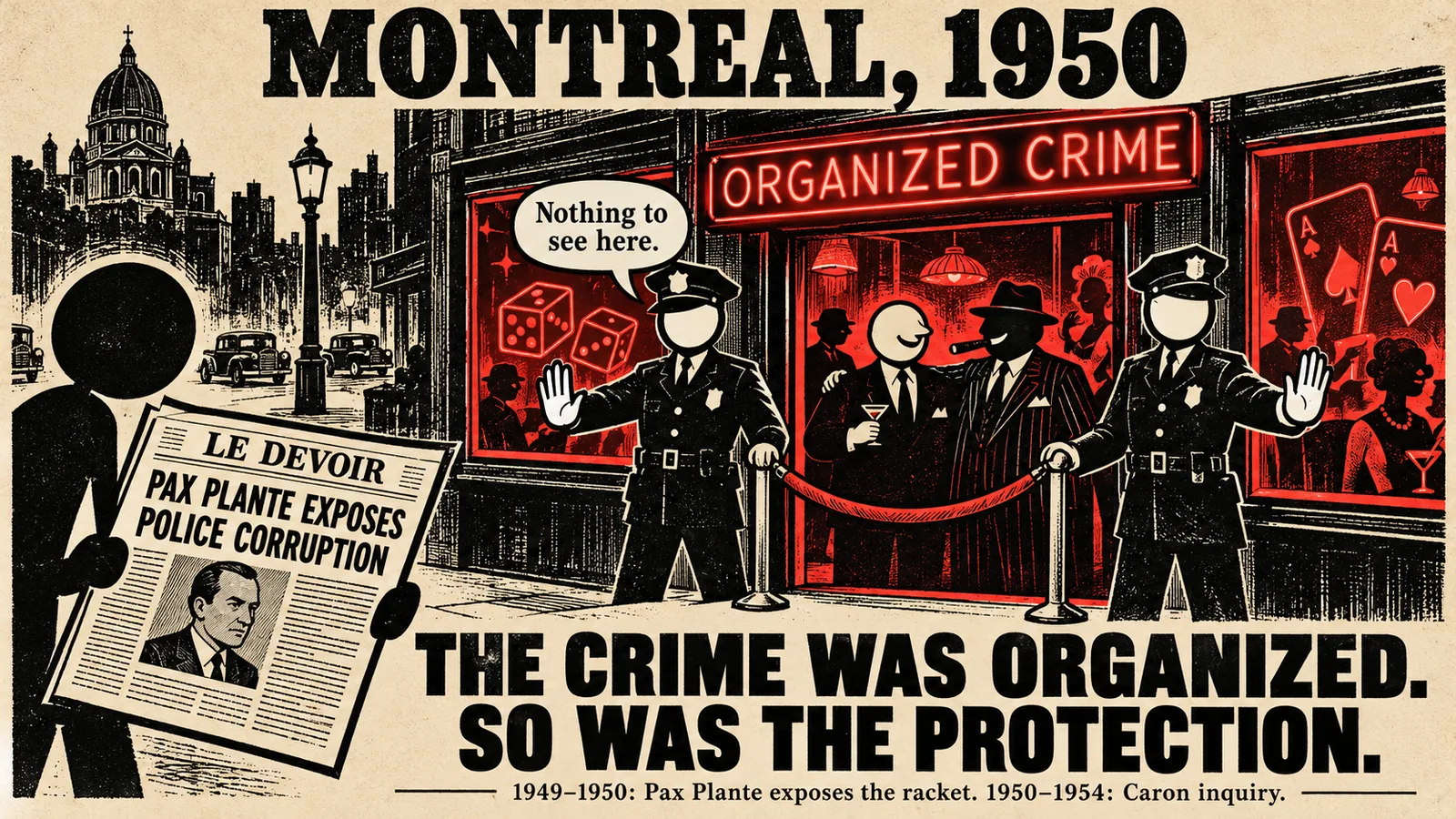
The sign on the door said there was nothing to see.
Behind it ran a schedule: the warning, the raid, the woman at the door booked as owner, the fine paid, the door open again.
The crime was organized. So was the protection, and only the half in uniform had to answer for it.
Where to check
every line above.
Grouped by the section each one supports.
i. The routine
The raids, the fines, rue Berger
- Archives de Montréal, “Pièces déposées à la Commission d’enquête Caron, 1950-1953”, 5 June 2013: the advance warnings, the woman at the door arrested as owner, the houses never closed for long, and the sixty thousand dollars a year in fines, citing Daniel Proulx, Le Red Light de Montréal (VLB, 1997), p. 21.
- Pacifique Plante, Montréal sous le règne de la pègre (Éditions de l’Action nationale, 1950), p. 32 (the barbottes across the city) and p. 45 (twenty-eight door numbers, 1,659 raids), with La Presse’s 1944 count of 116 brothels and the Ligue de vigilance sociale’s 1945 “sorte de taxe”, all as quoted in Félix Turcotte, M.A. thesis, Université de Sherbrooke, 2025.
- Gérard Filion, Fais ce que peux (Boréal, 1989), quoted in Kathleen Lévesque, “Jeu, prostitution et complaisance policière”, Le Devoir, 12 June 2010.
- Gilles Lafontaine, “Coderre, Louis”, Dictionary of Canadian Biography, vol. 16: the 1924 petition, the inquiry and the report of 13 March 1925. Mathieu Lapointe, “L’escouade de la moralité”, Encyclopédie du MEM, 2019: the amendment after Coderre and the refused requests of the 1940s.
ii. The squad
Plante’s appointment and dismissal
- Maude-Emmanuelle Lambert, “Pacifique Plante”, The Canadian Encyclopedia, 2016: birth and death, the autumn of 1945, the appointment of 7 August 1946, the series dates, the petition of 11 May 1950 and the seventy-four signatories, the years after 1954 and the departure for Mexico in 1958.
- Lapointe, “L’escouade de la moralité” (above): the change of method, the suspension of March 1948 and its stated grounds, and the order for the inquiry in May 1950.
- Maryse Bédard, “Albert Langlois, un chef de la police controversé”, Encyclopédie du MEM, 2019: his appointment in March 1947, the appeal and his return on 14 March 1957.
- Mathieu Lapointe, “« Beaucoup trop Chicago » : la campagne de moralité publique montréalaise dans ses contextes internationaux”, Bulletin d’histoire politique 24(1), 2015: the murder of Harry Davis, the Ligue de vigilance’s second refusal in the autumn of 1946, and the circulation and sales of the series.
iii. The series
Le Devoir, 1949–1950
- Lévesque, Le Devoir, 12 June 2010 (above): the sixty-two articles, Pelletier’s three months with the papers, the charge of tacit approval by the city administration.
- Dave Noël, “Il y a 75 ans, Pax Plante dénonçait le contrôle de Montréal par la pègre”, Le Devoir, 28 November 2024: the attempt on the doors and the armed guards, the book at the end of February 1950 and the fifteen thousand copies, and the closing of the Red Light in February 1944.
iv–vi. The petition, the instrument and the judgment
The Caron inquiry
- Mathieu Lapointe, “L’enquête Caron”, Encyclopédie du MEM, 2019, from Scandale! Le Montréal illicite 1940-1960 (Cardinal, 2016), pp. 242–244: sixty-three accused, fifty-eight officers and five executive-committee members, 373 witnesses, 325 sittings, half a million dollars, courtroom 24, Duplessis and the stenographers, the requirement of precise accusations, the verdict on about twenty officers and on Plante’s dismissal, the politicians not convicted, and the timing before the election.
- Denys Chouinard, “Il y a cinquante ans… l’Enquête Caron, 1950-1954”, Archives de Montréal, 2004: the thirty-five associations of 19 March 1950, the 1,095 pages, the opening on 11 September 1950 and the close on 2 April 1953. (The Archives count 335 sittings; Lapointe’s 325 is used here.)
- Maryse Bédard, “Fernand Dufresne, un réformateur corrompu?”, Encyclopédie du MEM, 2019: the seven thousand dollars and ten years.
- Jean Boucher, La Presse, 9 October 1954, p. 25, quoted in Turcotte (above): Langlois’s year of ineligibility, the five hundred dollars in costs jointly with the city, the 1945 finding and the words “toléré ou favorisé l’épanouissement du vice organisé”.
- Marcel Martel, review of Mathieu Lapointe, Nettoyer Montréal (Septentrion, 2014), Cahiers de lecture de L’Action nationale, 2015, citing p. 358 on the politicians acquitted for want of sufficient evidence.
vii. The log
After the judgment
- Lapointe, “L’enquête Caron” (above), and Lambert, “Pacifique Plante” (above): Drapeau’s election on 25 October 1954, his age, the Ligue d’action civique, Plante’s return, the election of 1957, the threats, Mexico and his death on 9 August 1976 in Guadalajara. The Canadian Encyclopedia’s English entry dates the committee’s new name to January 1951.
- The seventeen days run from 8 to 25 October 1954.
Visual direction after the oceanographic films of Jacques-Yves Cousteau and the crew of the R.V. Calypso, 1943–1996. The saucer is the SP-350 “Denise”. No affiliation; the debt is the point.